Seasonal Color Analysis: A Guide to the Four Seasons
Understand the seasonal color analysis system, compare Spring, Summer, Autumn and Winter, and explore the more detailed 12- and 16-season approaches.
On this page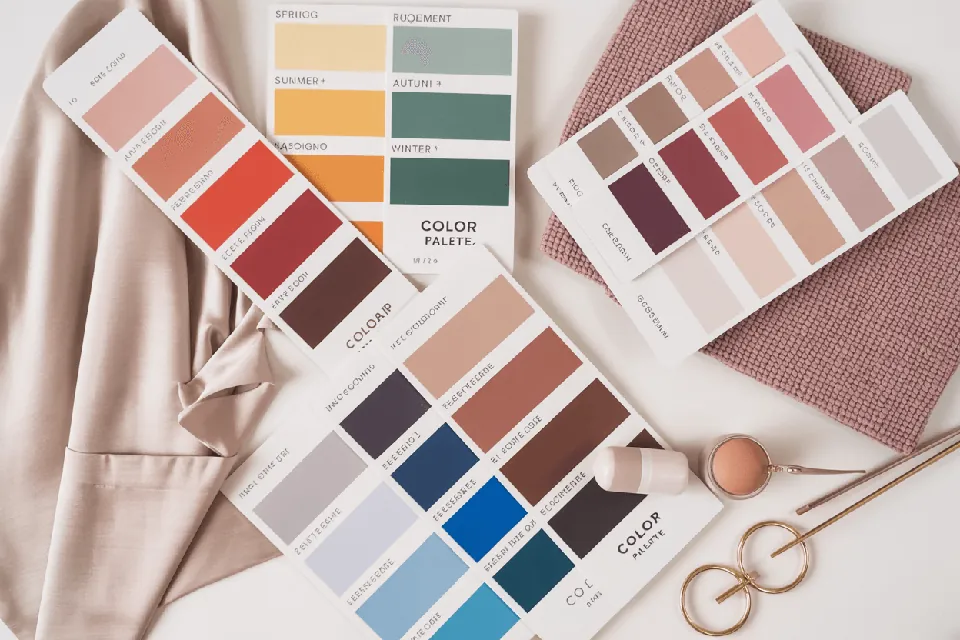
What the four color seasons describe
Seasonal color analysis groups colors by their visual qualities, not by your birthday or favorite time of year. Spring is usually warm and clear; Summer cool and muted; Autumn warm and muted; Winter cool and clear. Each family contains lighter and darker shades. A season is a useful vocabulary for comparing clothes, not a rule about who you can be.
Read temperature, depth and chroma together
A warm/cool label alone is not enough. Compare how light or deep colors sit beside your face, then compare softened shades with more saturated ones. Natural contrast matters too: a small bright accent and a full bright outfit have different effects. Hair or eye color alone cannot decide your palette.
Four seasons, 12 seasons or 16 seasons?
More detailed systems divide the broad families by a dominant quality such as lightness, depth or softness. Names and boundaries vary between systems, so a label is not a universal color measurement. Start with a repeatable warm/cool and soft/clear comparison; use a subtype when it helps you make a real clothing choice. The guides below cover Soft Summer, Deep Winter and Deep Autumn.
Sources and further reading
This guide uses seasonal color theory and the sources listed below. Outfit examples and swatches are illustrative; compare them in your own lighting.